
Yvonne's Cryo Conquest: Redefining Tactics in Arknights Endfield
Jan 22, 2026
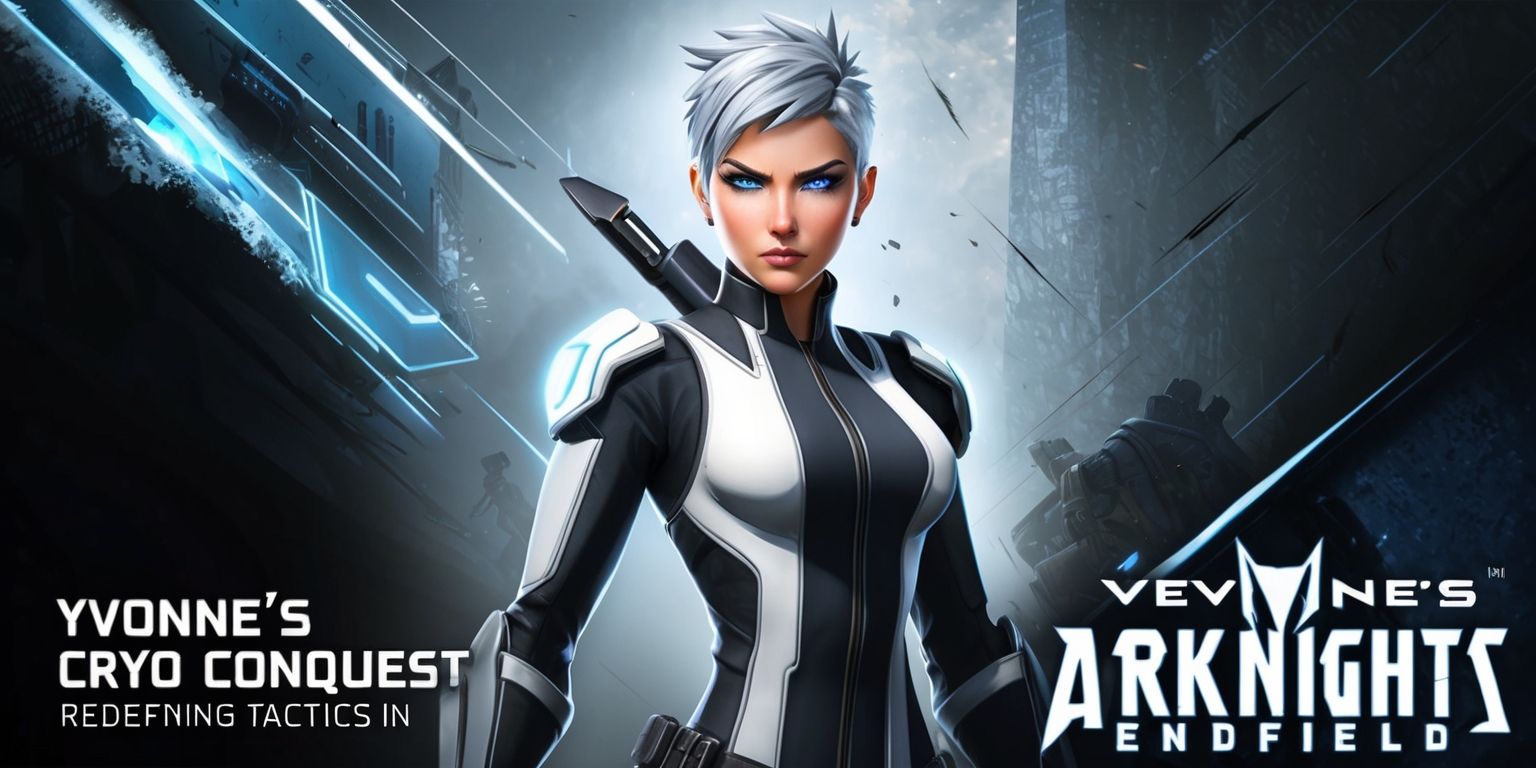
In the world of Arknights Endfield, Yvonne emerges as an operator whose unique abilities have captured the attention of strategists and enthusiasts alike. With the mastery of Cryo elements and the unconventional use of handcannons, Yvonne is celebrated not only for her distinctive design but also for her tactical versatility. Many players have come to rely on her strength in teams that rely on Cryo or mixed elemental inflictions. The operator’s toolkit is rich, featuring rapid basic attacks, engaging battle maneuvers, and a transformative ultimate that can turn the tides of battle. The interplay of attributes such as intellect and agility, along with a suite of enhancements and talents, elevates Yvonne into an essential asset on the field.
A Multidimensional Character Profile
Yvonne is a six-star Cryo operator who stands out as a caster with a unique flair for using handcannons. Her kit is built around both consistent damage output and control-enhancing abilities. Serving primarily as a key component in Cryo-centric teams, she displays a natural synergy with partners who induce Cryo or Nature inflictions. When the operator’s skills are deployed in combination with those of allies such as those who bring additional elemental pressures, the overall effectiveness can be dramatic. In terms of attributes, the delicate balance between intellect and agility further refines her performance, allowing her to deliver impactful hits. Her design invites players to experiment with diverse team compositions, thereby maximizing her burst and sustained damage potential on the battlefield.
An Innovative Approach to Weaponry and Tactics
At the heart of Yvonne's prowess lies her dependence on handcannons, a weapon choice that sets her apart from many of her peers. This arsenal is tailored for operators who seek both precision and explosive cooldown capabilities. The handcannons not only complement her role as a caster but also enable her to perform dynamic attacks that range from sequence-based assaults to powerful finishers against sacrificially staggered adversaries. Her arsenal encourages players to time their engagements carefully, capitalizing on momentary weaknesses in enemy lines. As each handcannon shot can cumulatively lead to a critical impact, the precise calibration of these attacks becomes essential to proficient play. The blend of aesthetics and functionality in her weaponry hence opens diverse tactical avenues for both new players and veterans alike.
Exploring the Variety of Abilities
Yvonne's skill set is marked by a blend of core and supplementary abilities. Her basic attack, known as the exuberant trigger, executes a sequence of up to five strikes that deliver Cryo damage in rapid succession. This foundational move is designed to inflict a mild stagger upon adversaries, gradually destabilizing their formation. In addition to her conventional attacks, Yvonne boasts a dive attack that grants her the ability to shift positions mid-engagement while keeping her opponents in check. The finisher mechanic further enhances her value; when executed near a weakened enemy, it not only deals massive Cryo damage but also aids in resource recovery. Each of these abilities is crafted to harmonize with her overall tactical function, making her an operator well-suited for both crowd control and focused strikes within the heat of battle.
Enhanced Skills and Synergistic Talents
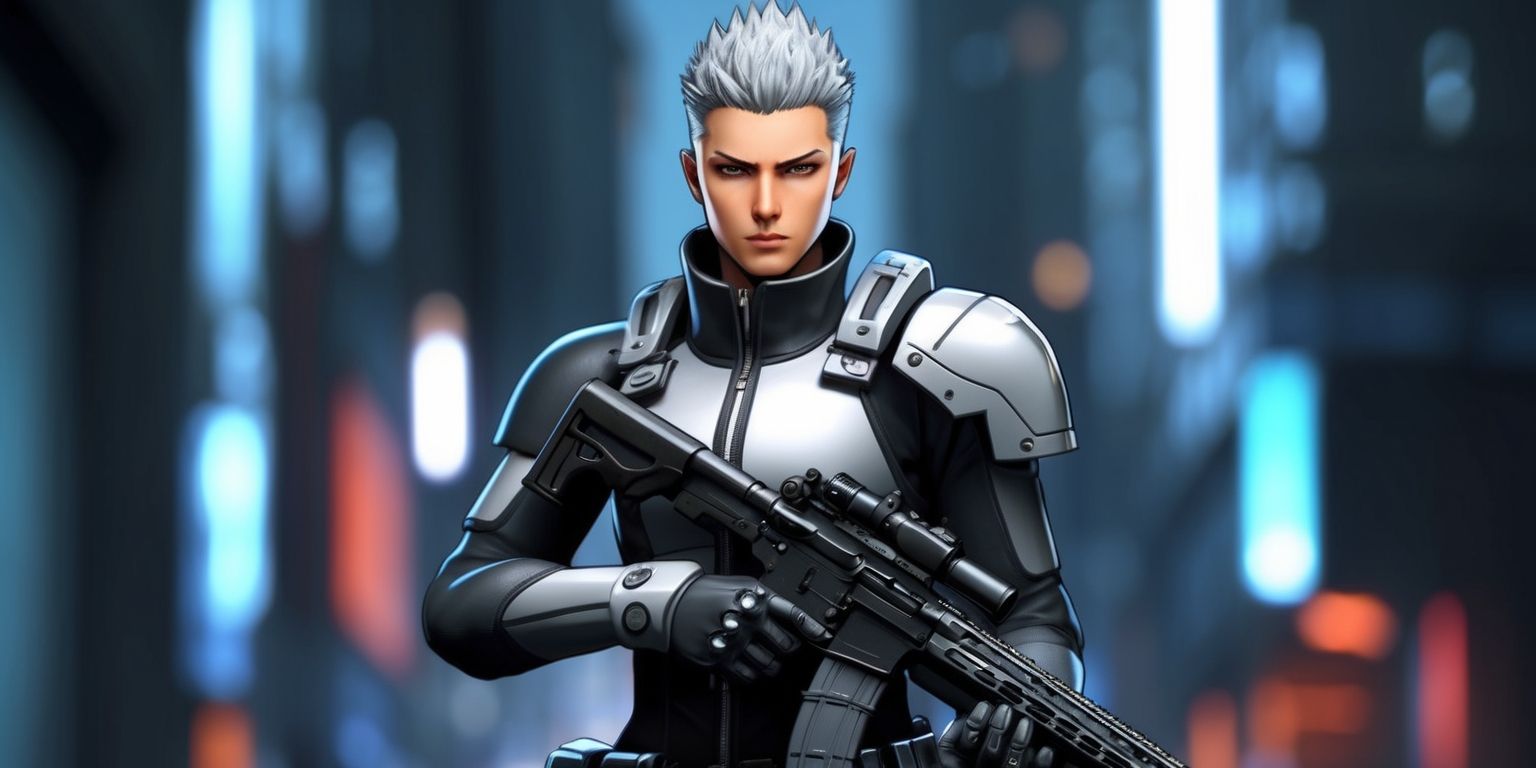
The operator’s skill tree offers a robust array of improvements that actively shape her performance on the field. At the core, abilities like Flash Freezer and Flawless Creation incrementally boost the radius of effect and critical rate, respectively. These enhancements give her an edge, especially when executing combination moves. Subsequently, talents such as Tink-a-Power significantly enhance the damage output when facing enemies affected by Cryo or additional elemental statuses. Moreover, the Rebellious Mood parameter aids in resource retention by rewarding precise hits, thus ensuring that the cycle of attack remains uninterrupted. With expert-level improvements in her ultimate skill, Yvonne not only amplifies her attack potential during pivotal moments but also sustains a buildup of energy that further reinforces her battle rhythm, making her a formidable presence in any lineup.
Dynamic Basic Attacks and Their Strategic Deployment
Central to Yvonne’s performance is her series of basic attacks, which epitomize the operator’s capacity for both immediate disruption and extended, calculated damage. In the heat of combat, executing the basic sequence correctly is pivotal. The intricacy lies in the ability to chain Permitting as many as five successive strikes that not only This revision maintains the original context while presenting the idea in a completely unique way chip away at enemy defenses but also trigger additional effects such as a notable stagger when the final strike is executed. When positioned near adversaries in compromised states, the operator can transform this sequence into a finishing move that maximizes output and resource recovery. This dual function of yielding both incremental and high-impact results ensures that her basic attacks remain a fundamental part of her overall tactical repertoire, inviting ongoing strategic experimentation.
Focused Battle Skills and Their Tactical Impact
A distinctive battle skill in Yvonne’s kit involves the deployment of a freezing bomb that unleashes a localized burst upon contact with adversaries. This function is tailored to target clusters, dispersing Cryo energy that extends beyond the primary point of contact. Particularly effective in situations where enemies are already susceptible to further elemental influences, the explosion reinforces Yvonne’s role as an operator who not only inflicts direct damage but also strategically places additional Cryo infliction on multiple fronts. The skill’s design means that when the conditions are optimal, its sequential activation can lead to momentous bursts of energy, further compounded by an increase in critical impact. The tactical depth provided by this mechanism allows players to orchestrate combined strikes while exploiting the enemy’s momentary vulnerabilities.
The Intricacies of Combo Skill Mechanics
Yvonne’s combo skill offers an engaging method to punctuate ongoing engagements with additional bursts of Cryo damage. Upon executing her final strike on an enemy suffering from specific elemental conditions, the combo skill is triggered to deploy an auxiliary entity known as Frost-e-Bytee. This entity, once activated, immediately begins to influence the surrounding area by consistently emitting energy that draws nearby foes closer, effectively setting them up for subsequent damage. This chain reaction not only advances her overall output but also ensures that opponents are continuously pressured. The versatility embedded in this mechanism means that it can pivot the course of an engagement, especially when players harness precise timing to maximize both continuous attacks and interval-triggered sequenced explosions.
Potency in Ultimate Skill Execution
The ultimate skill encapsulates Yvonne’s potential to single-handedly shift the dynamics of a battlefield. This ability summons a support bot while temporarily enhancing her basic attacks, a transformation that imbues her subsequent strikes with escalating damage modifiers. Each successive hit during this phase contributes to a cumulative buff that ultimately coalesces into a critical final attack. This climactic strike not only inflicts a significant burst of Cryo damage but also imposes additional elemental infliction on nearby adversaries. The interplay between the support bot and the killzone created by her enhanced attacks emphasizes a strategy centered around overwhelming cases with coordinated precision. Though the skill demands substantial ultimate energy accumulation to execute, its payoff makes it a central pillar in high-stakes tactical operations.
Customization Through Gear and Equipment
Beyond the core abilities, Yvonne’s performance is heavily influenced by the selection of gear and weapon modifications. The operator benefits from outfitting options that allow her to equip equipment of varying quality thresholds—blue, purple, or even gold—as per the specific tactical requirements of each engagement. Among the optimal combinations, the Artzy Tyrannical Navigator gear stands out as a favored choice to maximize both offensive and supportive parameters. These enhancements augment her natural critical damage potential and bolster her attack speed, enabling her to sustain prolonged damage sequences even in the midst of chaotic encounters. Players who invest in honing her equipment facilitate a smoother integration into diverse strategies, ensuring that every stat tune-up contributes to her overall battlefield effectiveness.
Team Coordination and Synergetic Interactions
One of the defining attributes of Yvonne lies in her compatibility within various team compositions. While she is often deployed in predominantly Cryo-focused teams, her abilities allow her to thrive in mixed rosters as long as complementary elemental effects are present. When paired with operators who inflict Arts or Nature effects, she exhibits elevated damage output due to amplified synergy. Her capability to trigger Cryo and solidification effects makes her an ideal partner for characters whose skills rely on methodical crowd control. Players will find that the seamless integration of her attack and supportive talents into larger tactical frameworks often results in dynamic engagements, where careful planning and well-timed movements can result in significant enemy disruption. This versatility solidifies her status as a universally appealing operator regardless of team specialization.
Balancing Strengths and Tactical Weaknesses
Yvonne’s strengths are as prominent as her tactical nuances, each playing a critical role in determining her utility during missions. Her profound impact in applying Cryo infliction, combined with her improvisational battle skill and explosive ultimate, marks her as an effective operator for both direct damage output and tactical crowd management. However, the inherent high cost associated with her ultimate energy consumption means that players must exercise disciplined timing and precise engagement strategies. Additionally, while her damage potential is impressive, the reliance on triggering elemental synergies can occasionally restrict her flexibility under unideal conditions. Such contrasts add an extra dimension to gameplay, where players must gauge the timing and frequency of her abilities to harness her full potential while mitigating the moments when her resource-demanding mechanics come into play.